Office Furniture Isn’t the Problem — It’s the Symptom
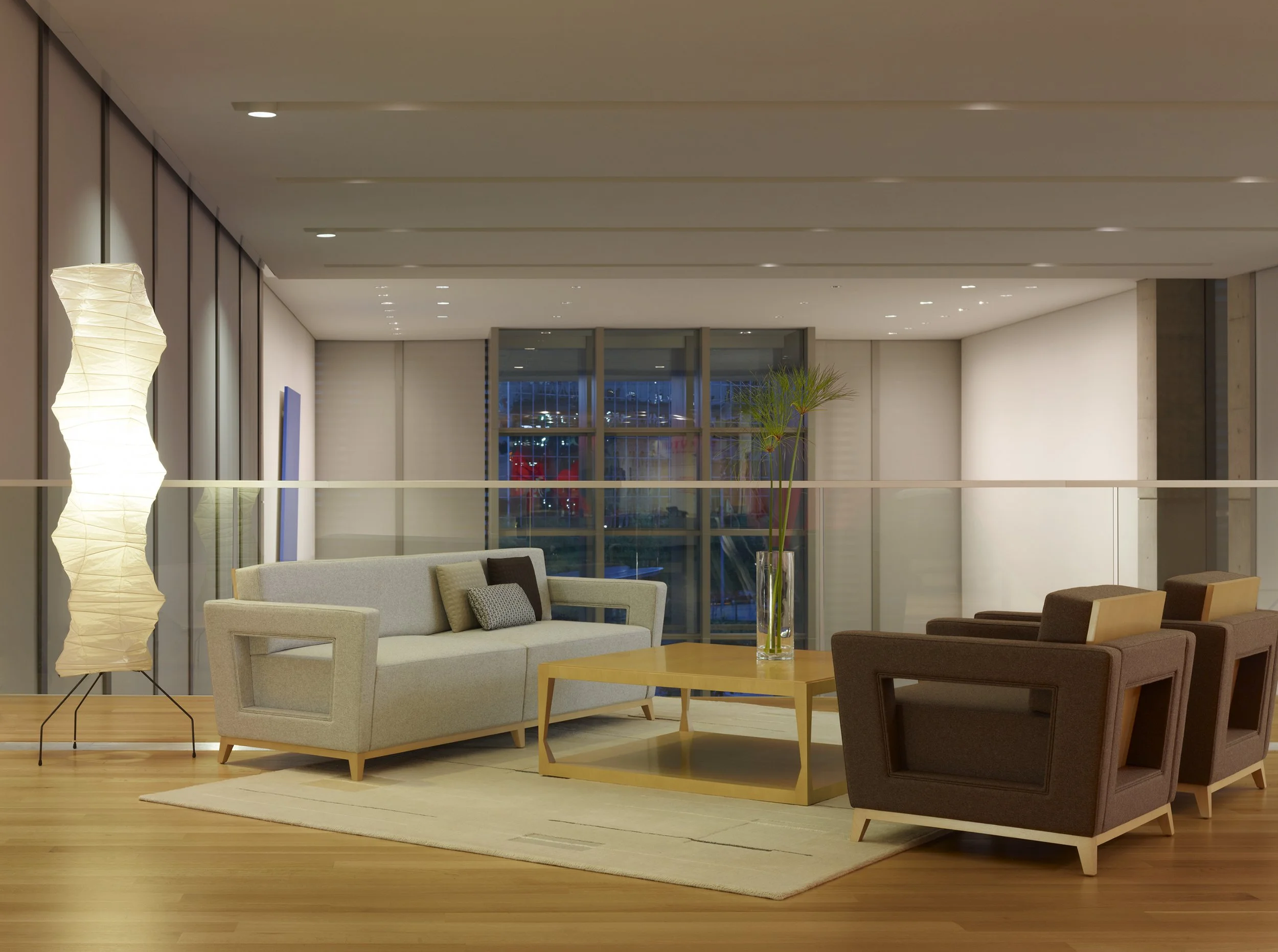
Chic lounge furniture featured in a second-floor hallway.
Office Furniture Isn’t the Problem — It’s the Symptom
When office furniture doesn’t work, the instinct is to blame the furniture.
The desks feel wrong. The chairs aren’t comfortable. The collaboration spaces feel forced. By 2026, most organizations are already familiar with the ideas meant to prevent buyer remorse — hybrid work, flexibility, ergonomics. And yet, even furniture decisions can still fall short.
That doesn’t mean the decision was careless or uninformed. More often, it means furniture was selected before the full picture was clear. Furniture is rarely the root issue — it’s usually the most visible result of decisions made much earlier. At Office Express, we’ve seen this across dozens of projects: teams choose pieces that make sense in theory but don’t fully support how work actually happens day to day. The desks themselves aren’t the problem. The opportunity lies in aligning planning with real-world use.
Many offices are still operating in spaces designed around pre-2020 assumptions — full-time occupancy, static seating, and predictable growth. If those setups worked well in the past, especially if the space was evaluated years ago, it’s easy to assume they’ll continue to work. When assumptions and reality start to drift apart, furniture absorbs the tension. Desks go unused. Meeting rooms sit empty. Lounge spaces become expensive placeholders. These outcomes aren’t signs of failure — they’re signals that it’s time to reassess.
The good news is that this is entirely solvable. Few teams can fully validate how their space is being used before committing to a budget — not because they don’t care, but because timelines move fast and decisions often need to be made quickly. If you had the time, there would be more consideration of peak days versus average days. Assigned versus shared seating. Areas that look efficient on paper but don’t function well in practice. The trick is to bring issues to the surface as early as possible and with a proven process, allowing your furniture decisions to be far more confident and significantly less risky.
Work itself also isn’t one-size-fits-all, and your space shouldn’t be either. Focused tasks, collaboration, meetings, short-term work, and storage-heavy roles all place different demands on an environment. When those differences are acknowledged upfront, it becomes much easier to select furniture that truly supports people instead of forcing them to adapt to it.
Cost is another area where clarity changes everything. Unit price is easy to compare, but it rarely reflects the full investment. Durability, reconfiguration, disruption, and future change all matter over time. When those factors are understood early, cost conversations become more transparent — and far less stressful. It’s not about spending more. It’s about knowing what you’re investing in and why.
In 2026, successful office furniture decisions aren’t about chasing trends or guessing what might work. They’re about understanding how work happens in your organization today —and using that insight to make choices that can adapt as needs evolve. Taking into consideration the daily needs of your team and space before you begin the buying process will free up headspace and mitigate stress from the overall experience, leading to satisfaction and clarity in your overall result. From our experience at OEX, the most effective spaces are the ones where furniture reflects thoughtful planning, supports daily workflows, and gives teams room to do their best work.
When furniture works well, it’s part of your team. When it doesn’t, it’s usually pointing to something worth paying attention to — and something you now have the tools to address.
Recognizing that furniture is the symptom is just the first step. The next is using that understanding to make informed, confident decisions that support your space, your people, and your future growth. We’ve outlined this process in our OEX 2026 Furniture Purchasing Guide — a practical resource designed to give you the full picture, remove guesswork, and help you move forward with confidence. To download this resource and other relevant assets for your workspace, subscribe to our exclusive mailing list where we share industry insights, workspace tips, and keep you up to date on the best options for your space. Use this link: Work Smarter Here
If you have questions or want help evaluating your space, reach out to our team at info@oexusa.com or 248-307-1850. One point of contact. Clear answers. No surprises.