What Takes Your Private Office Spaces to the Next Level? 3 Easy Updates to Double Productivity
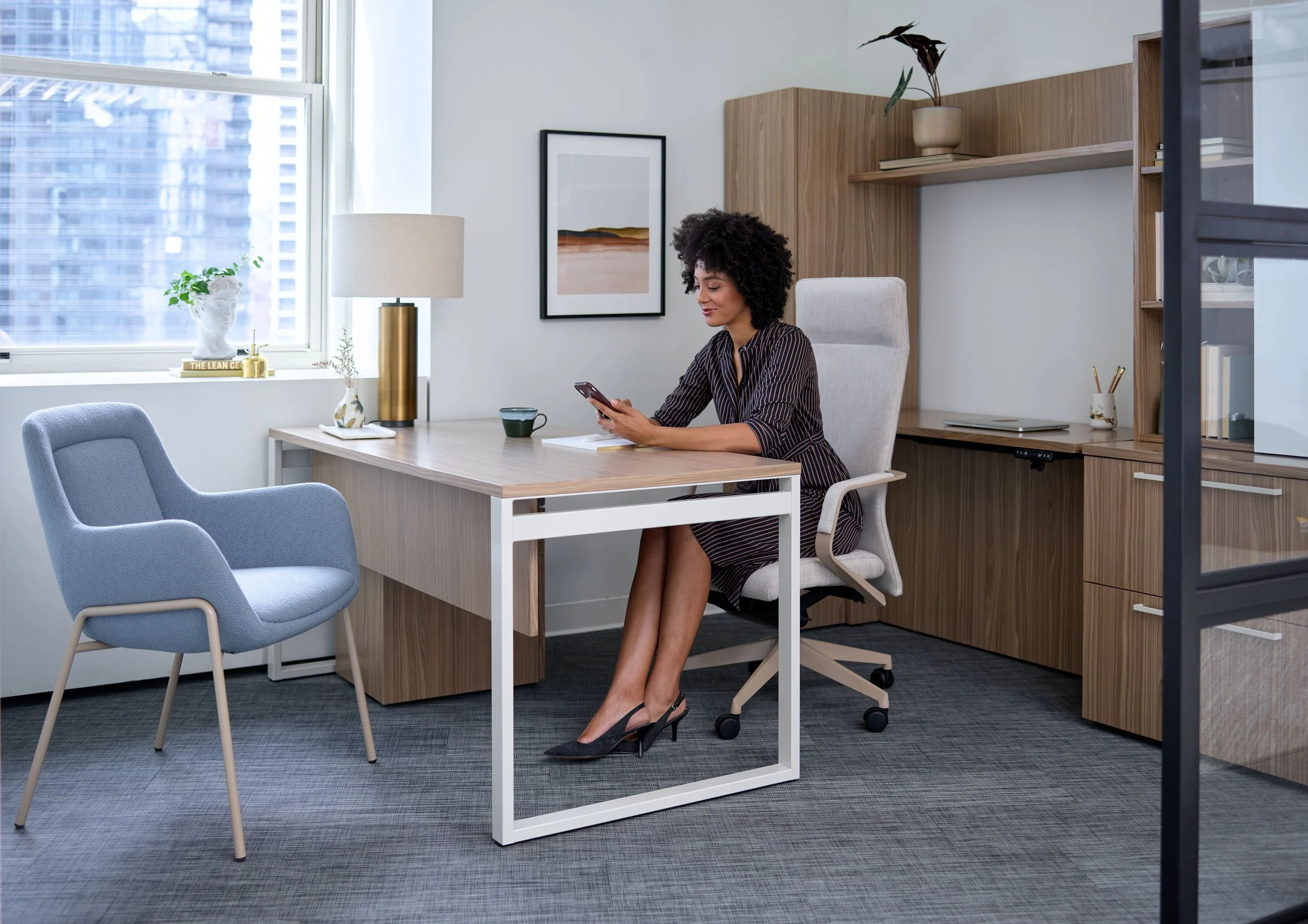
A businesswoman in a pinstriped dress responds to messages on her phone while sitting at a sleek, warm wood toned and powder finished white desk, in a high-backed executive chair, in a private office with guest seating and casegoods behind her.
🎧 Prefer to listen to this article?
Listen to the quick audio briefing!
This is an engaging AI-generated summary based on our team’s article.
The need for private spaces can’t really be disputed in 2026. Per a recent Steelcase survey, a whopping 69% of middle managers experience disruptions at work and struggle to focus. Without privacy, they’re taking calls at their desks, leading to interruptions and fatigue. On top of that, 2/3rds of managers listed privacy as their most important need in the office.
But if we’re talking in statistics, this doesn’t point to what you’d instantly think – because what happened to all the talk about collaboration and open concept communication? Are we disappearing back into a sea of cubicles? The numbers don’t really support that either. According to Gensler's Workplace Survey, only 14% of the workforce would prefer to return to a “traditional” office environment.
So what does all of that mean for our offices?
Most would agree that it means we need privacy if we’re going to get certain tasks done. But it also means we don’t want to be isolated all day without the choice of our best work environment for a particular project.
We’re often caught in the middle of two extremes with private offices – we spend all our time too isolated and not connecting as a team, or we underuse them because they’re not enjoyable to be in. There’s a compromise here, and it even exceeds that. There’s a pleasant way to experience a private space in the office while providing a healthy environment to focus deeply and increase productivity in your day.
We like to think about it like this: who is using the space, what can you do in the room itself that propels productivity and wellness, and how do the choices a designer makes impact the overall performance of your team in that space?
A quick and easy breakdown is right here - read on!
Who is Using the Space?
This is singularly the most important thing to ask before thinking about the space itself. Is this private office for a CEO? A CFO? A sales manager? An HR manager? Or is it a shared focus room that multiple team members will pop into throughout the day?
If it’s a permanent office for one person, the setup should reflect how they actually spend their day. An HR manager needs total privacy so people feel safe having confidential conversations. A Sales manager might need a setup built for back-to-back meetings where they can stand up and move around. Your CFO might need extra surface space to spread out financial reports across multiple screens, while your CEO might benefit more from a couple of comfortable chairs for quick one-on-ones instead of a giant desk.
If it’s a shared focus room, the key is keeping things simple and adaptable. You want chairs that are easy to adjust, integrated tech, and a setup that feels welcoming to whoever walks in next.
Elevating the Room: Furniture, Atmosphere, and Placement
To make a private space actually work for people, it helps to look beyond just four walls and a door. When you balance three key areas, you turn a basic room into a space that actively helps your team focus and feel good doing it:
1. The Furniture: It’s hard to stay focused when your neck hurts or your desk feels cluttered. Simple ergonomic tweaks — like adjusting monitor heights to eye level, choosing sit-to-stand options, and making sure there's enough leg room — keep physical fatigue at bay.
2. The Atmosphere: Noise, lighting, and temperature make or break how a room feels. Adding simple sound-absorbing wall treatments or acoustic doors keeps private calls private. Plus, giving people easy control over their lighting and warm, natural light helps lower stress and keeps focus sharp.
3. The Placement: Even a great office will get underused if it’s in a bad spot. Try to position private rooms where they catch natural light without putting desks right against noisy, high-traffic areas like the breakroom or main hallway.
When Is It Time to Add More Private Spaces?
If your team is struggling with ability to focus, ducking into hallway corners for calls, or hesitant to come back into the office, it can be a sign that investing in private spaces to accommodate their needs and those of your clients could go a long way.
When you give people genuine options for quiet, comfortable work, you create an office that naturally pulls them in because it actually supports how they work best. When you provide a dedicated space for focused work, it's astonishing how quickly people recognize how much that task they've been working on just needed a change of pace to get done.
How We Help with This
You don't have to figure all of this out on your own. We’re here to help you design spaces that balance team connection with real privacy. By looking at who is using the space and what they need to thrive, we help you create warm, practical offices that your team will actually love working in.