3 Workspace Trends to Watch for in 2027
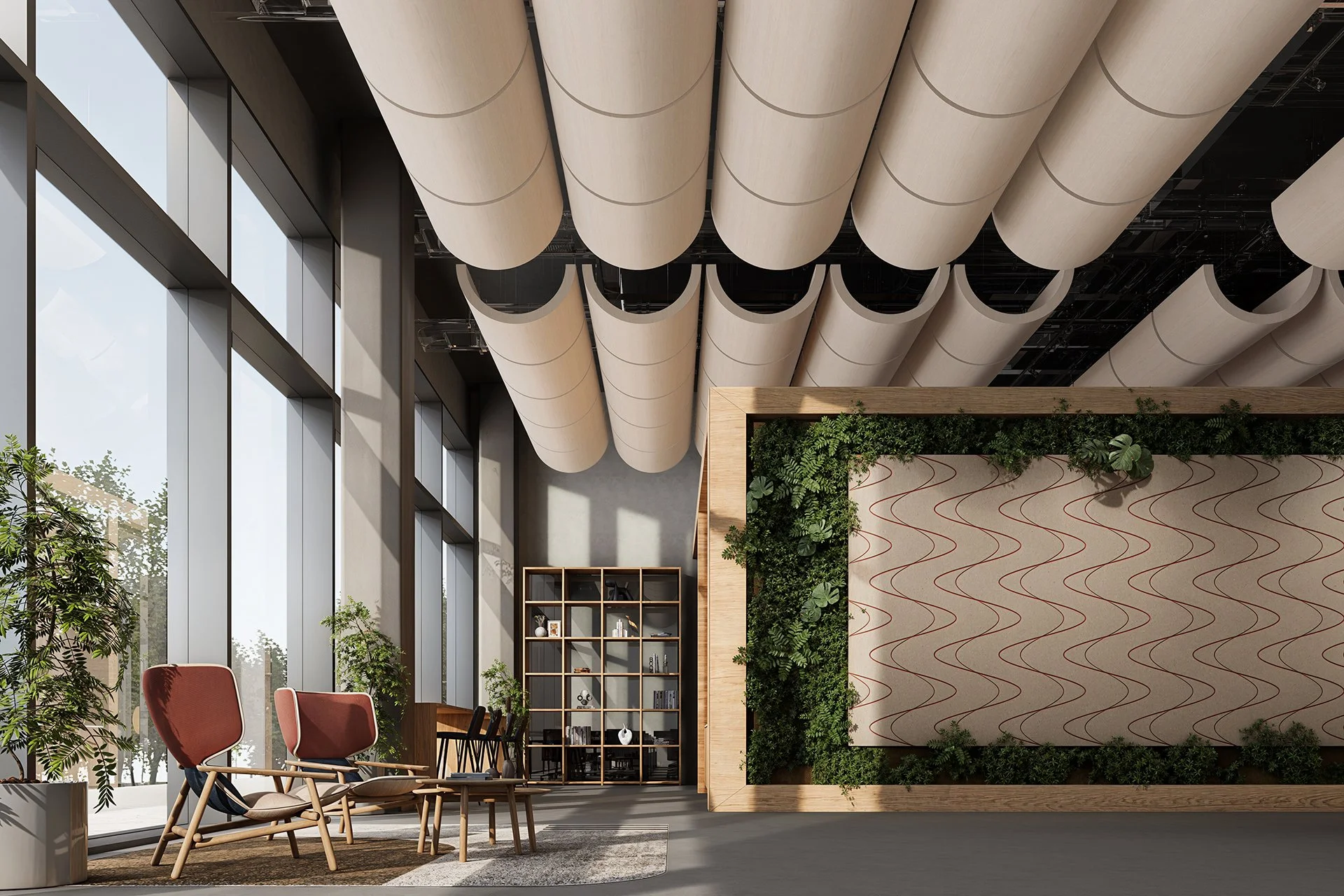
Modern workspace with biophilic elements, a large accent wall, a lounge touchdown space, and acoustic treatments on the ceiling.
Nearly 9 in 10 employers now expect employees to spend at least three days a week in the office, with that number having crept up steadily since 2020. Looking forward to 2027, we're seeing the increased desire to return to an integrated work environment, but a few question marks lie between the idea and the reality.
47% of employees rate their workplace experience as average or below average, and only 14% of companies are making major improvements to their spaces.1 Seems odd, doesn't it?
For businesses investing in their workplaces, there's a real opportunity here. What brings people into the office, how they work once they arrive, and what they need from their environment are all changing.
Our team identified three trends that are shaping what businesses should consider as they plan their workspaces for 2027.
Trend #1: The Office Has to Earn its Relevance
People are the reason employees want to come into the office, period, full stop.
In CBRE's 2026 survey, 77% of respondents identified colleague engagement as their primary incentive for office attendance. We weren't surprised to see what followed: workplace functionality, particularly access to the tools and spaces people need to do their jobs, is another important factor, cited at 59% in the survey findings.2
The reality is, if people in the office motivate others to invest in an in-person work environment, you have to observe what brings those first movers in. What can you offer in terms of team engagement, amenities, flexibility, tech functionality, and space usability that your team can't formulate for themselves working from home?
Ideally, everyone should be in a productive environment for how they work. Remote vs. in-person structures vary in success based on the industry, team size, and a number of other factors. Neither is the magic answer for empowering your team and moving your business forward. But it's undisputed in the polling that workplace environment is crucial in creating a space that serves as home base and launchpad for success in your company.
A few examples: a well-equipped conference room can make a working session more productive. Good acoustics can make calls easier and focused work more comfortable. A thoughtful mix of collaborative areas, private spaces, and functional workstations gives people more ways to work effectively throughout the day.
These details can help make the office a place employees choose for the quality of the experience, as well as the people they'll see.
For businesses, that starts with understanding how employees use their space. Where would better meeting rooms help? Could a different layout improve collaboration? Are people able to concentrate when they need to?
In our day-to-day work, we connect those needs to practical design decisions, bringing together furniture, space planning, acoustics, technology, and other interior elements.
The opportunity for 2027 is to create an office where people can connect meaningfully, offering them the tech integration and dynamic spaces that inspire creativity, progress, and morale.
Trend #2: AI is Asking for Office Space
CBRE's 2026 survey found that 23% of organizations said AI was already influencing their space planning, with another 30% expecting it to have a meaningful impact within two years.
There's serious discussion if AI will contribute to reducing the impact of a physical workspace. Fascinatingly, it continues to bring people together, emphasizing the need for in-person collaboration, creativity, and adaptability to the reality of integrating AI in systems as a strategic tool in companies. Half of respondents anticipated a shift toward more multipurpose, reconfigurable spaces, while 36% expected AI to increase demand for higher-quality amenities and workplace experiences.3
The changes will look different across businesses. Some may truly need less space as workflows evolve, but will adapt to more flexible furniture solutions to accommodate for sustainable change. Others are preparing for growth or new types of work. In the technology sector, 64% of companies planned to expand their office footprint over the next three years, up from 41% in 2025.4
That uncertainty makes adaptable design especially valuable. Modular furniture, movable partitions, and multipurpose meeting areas can help businesses accommodate changing teams and work patterns. Rooms may need to support training, collaboration, and focused work at different times. Technology and infrastructure need to keep pace, too.
Planning these elements together helps businesses make better use of their existing space while preparing for future needs.
The way we work is always developing, which is why we evaluate how our customers' workplaces function today and where changes could offer greater flexibility. That might mean reconfiguring existing furniture, introducing adaptable furniture systems, or rethinking how different areas of an office are used.
As AI changes the way work gets done, businesses have an opportunity to reconsider what their people need from the physical workplace and how their space can support what's ahead.
Trend #3: Discoveries in How Spaces Influence Occupants
Gone are the days of universal blueprints for every office. We're increasingly moving toward offices that are tailored specifically for the preferences and rhythms of the people in each room. Lighting, acoustics, materials, privacy, and access to nature all contribute to the experience of working in a space. Workplace design is exploring how those details affect people's comfort, focus, and ability to work throughout the day, and developing new ways to meet those needs.
In its 2026 research on neurodiversity, Gensler examined the sensory experience gap between neurodivergent and neurotypical employees.5 Both groups can experience sensory overload, but neurodivergent individuals generally expend more energy recovering from the same environmental demands. Noise, harsh lighting, visual clutter, and interruptions can accumulate over the course of a workday.
Between both groups and their mental health needs, it's an opportunity to acknowledge the need for quiet rooms that give employees a place to reset. Acoustic treatments can even accomplish this without putting up physical walls; there are a myriad of ways to design a recharge area in your workspace with minimal reconfiguring.
Other design approaches are expanding the conversation around wellness. Circadian lighting considers how indoor lighting can better align with natural daily rhythms. Biophilic design incorporates natural elements and daylight. Neuroarchitecture explores how lighting, sound, materials, and room proportions influence people's responses to their surroundings.
These ideas all connect to practical interior decisions. The furniture, flooring, lighting, wall coverings, finishes, and acoustics of a space contribute to how people experience it.
When you're considering how to tailor your office more to specific needs, engage your team with considering employee feedback, workplace assessments, and working with a team like us, who can help identify where adjustments would make the biggest difference.
Feeling More Prepared for 2027?
A successful workplace brings together people, space, and the way work gets done. As businesses plan for 2027, the opportunity is to make thoughtful investments that account for the developments being made in work processes, but still fit your team and your vision.
We serve as a workspace team, guiding you through those decisions and coordinating solutions across furniture, space planning, flooring, lighting, acoustics, and other interior needs.
Whether the next step is a targeted improvement or a larger redesign, understanding how the space needs to function is a useful and easy place to start.
So if you're planning an office project for 2027, let's talk. We can help you identify opportunities and create a workspace that does more than work for you. We'll create one that stays ahead of the changes that come with the modern workplace.
Sources
1. CBRE, 2026 Americas Office Occupier Sentiment Survey
2. Source: CBRE
3. Source: CBRE
4. Source: CBRE
5. Gensler: Neurodiversity in the Workplace