What Companies Forget to Plan for When Designing an Office Space
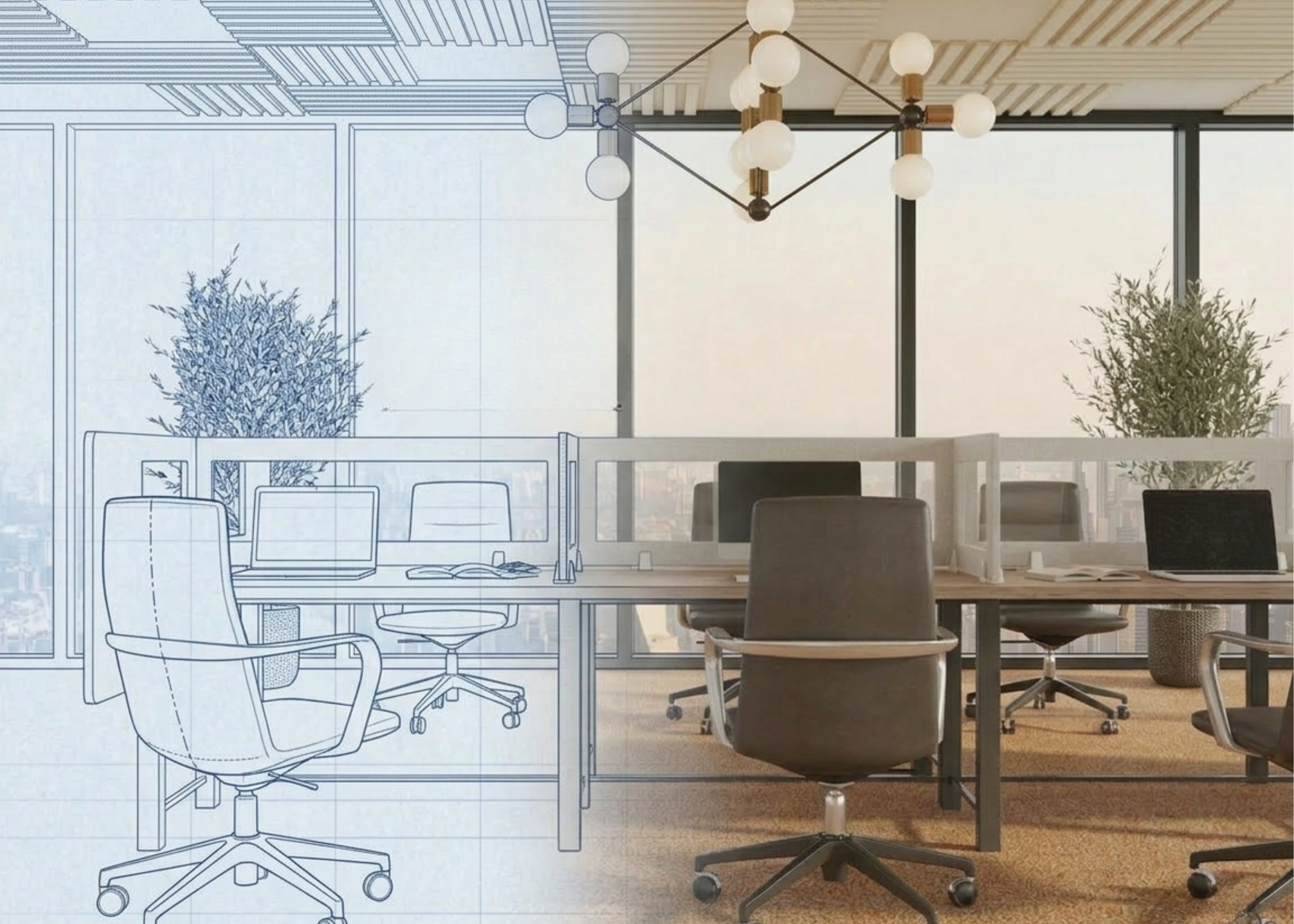
A conference room where the left side is a sketch of the space and the right side is an actual workstation setup.
3 Steps Turn a Good Space Into a Great One
If you're redesigning your office space, congratulations! The next step is to build an office space that both exceeds your expectations and fits your needs. If you get through the whole process and your team is frustrated with the new layout by mid-week, the problem isn't the design itself — it's what you didn't even know to look for before the design began. There are three things nearly every company misses, and each one has years of research behind it. Our goal is to make sure you can solve these problems now, not in your next lease cycle, and enjoy the results that follow.

A group of employees gather around a conference table having a discussion.
Ask Employees What They Need
Your team already knows what they need to do their best work. All you have to do is ask. Most companies have strong instincts about their new space — better lighting, a more open floor plan, a fresh aesthetic — but sitting down with the people who will actually use it reveals an entirely different set of priorities. What worked in the old layout? What made it hard to focus? Where did collaboration happen naturally, and where did it feel forced?
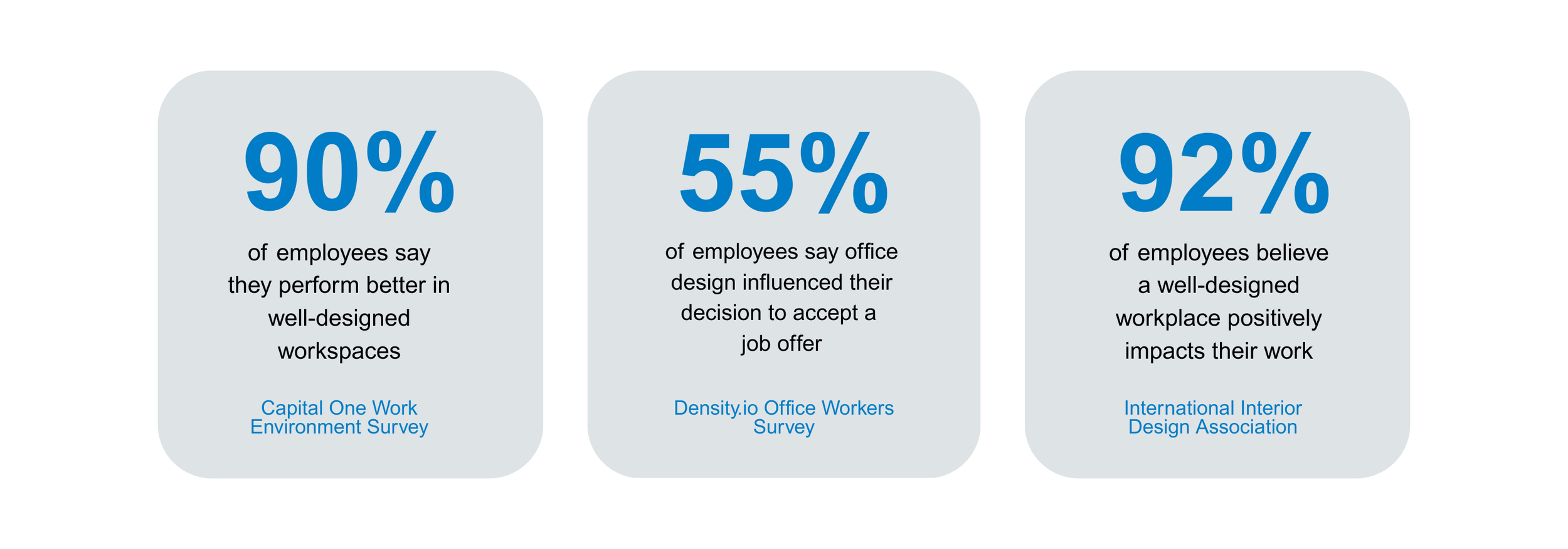
The data on this is clear. According to Capital One's Work Environment Survey of 3,608 office professionals, 90% said they perform their jobs better in well-designed workspaces. But the same research found that employee wants are often surprising: the top priorities weren't open-plan layouts or trendy amenities — they were access to quiet spaces for focused work, natural light, and the ability to take breaks throughout the day. Without asking, you'd never know.
A Gensler Research Institute survey of over 2,000 U.S. workers reinforced why soliciting employee feedback is so important: the highest-performing workplaces are those that support all modes of work — individual focus, collaboration, and everything in between. Employees in high-performing workspaces said they would willingly come into the office one extra day per week because their environment made both individual and team work easier.
The fix is simple: before any floor plans are drawn, hold structured conversations with employees across roles, seniority levels, and working styles. Ask what worked in the previous space, what didn't, and what would make them genuinely excited to come in. That input doesn't just improve the outcome. It makes your team actually take ownership of the space, encouraging trust and retention.
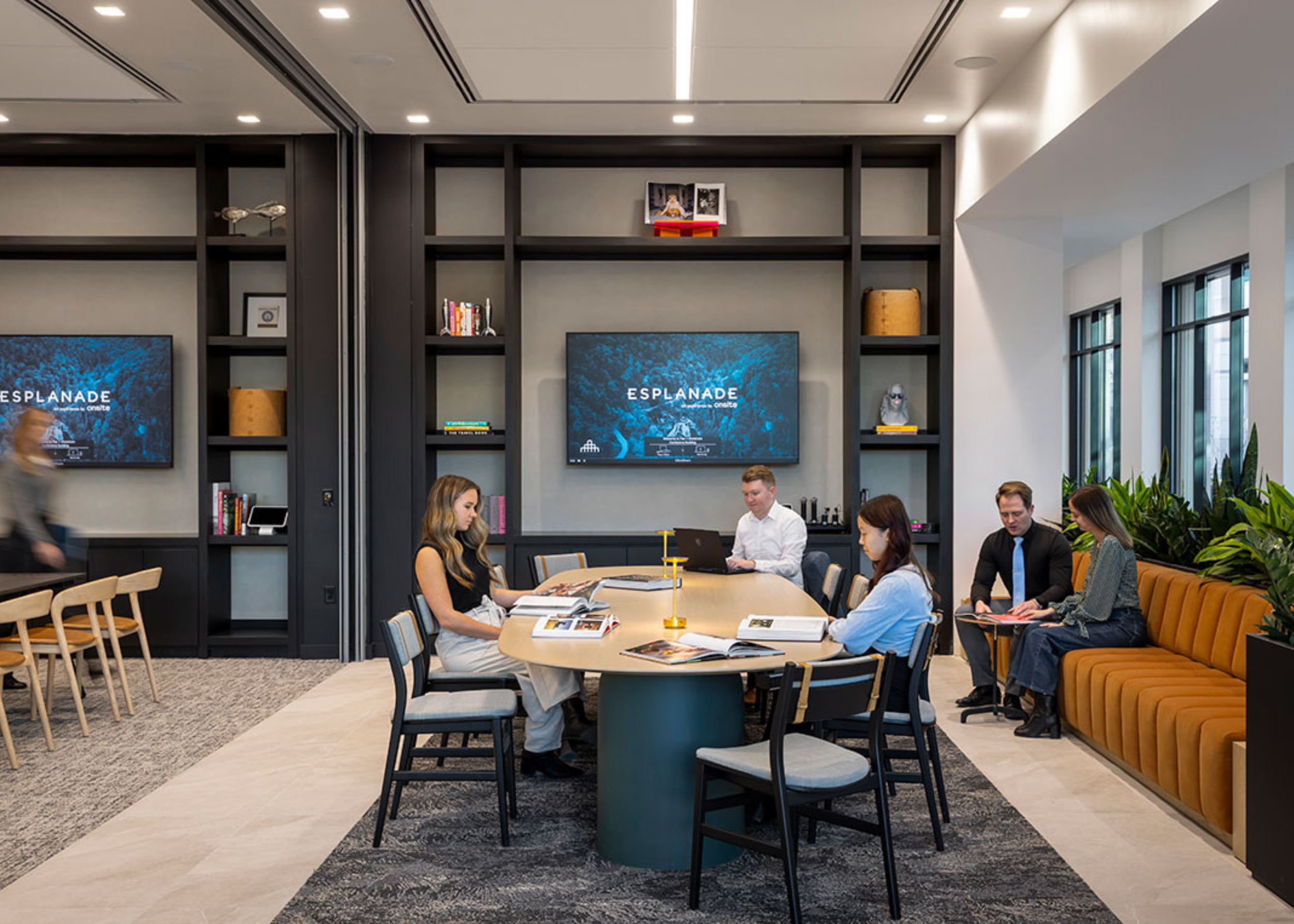
A group of employees work independently and together around a coworking table in a comfortable office environment.
Planning for Growth
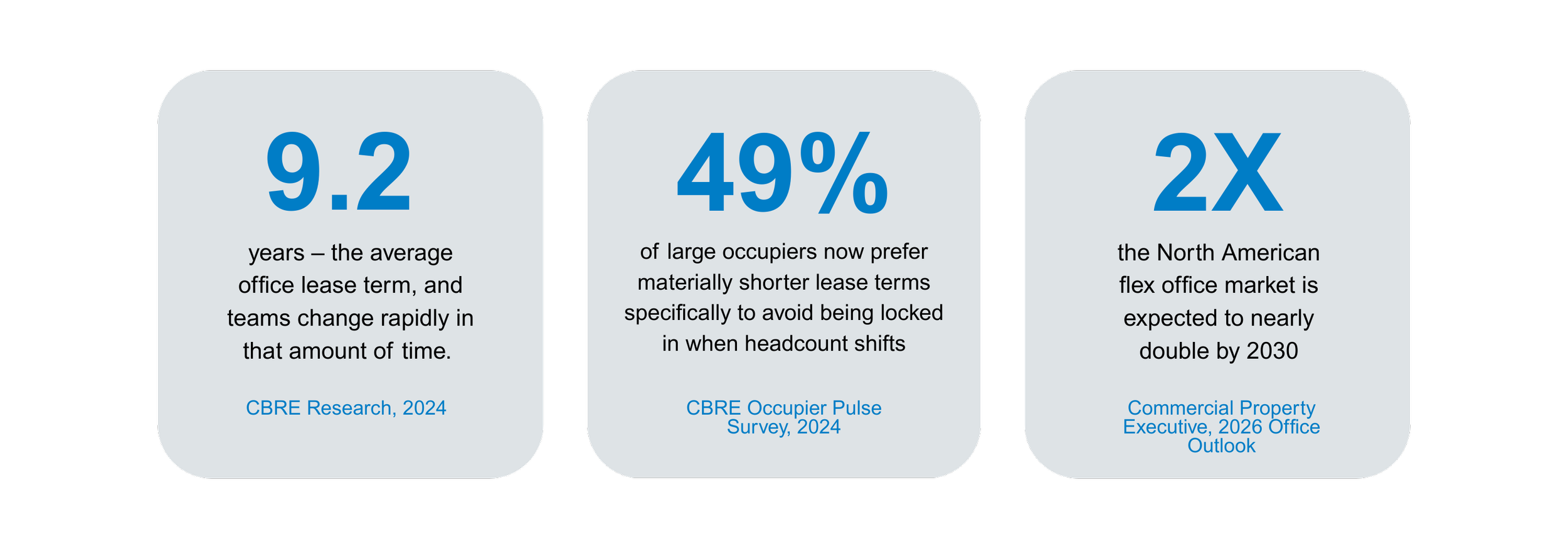
The best offices grow with you. Build flexibility in from day one, and you'll never outgrow your space — instead, it will move forward with your team. But most office designs are built around today's headcount and today's workflow, with little thought given to what the company looks like in two or three years. That's a costly assumption.
Companies are actively expanding their office footprints right now, and the ones getting burned are the ones whose spaces weren't built to absorb that growth. The decisions companies make about their space right now will determine whether they can keep up with that demand. The ones with rigid, fixed layouts are the ones that get stuck with paying to renovate or relocate instead of simply reconfiguring.
Flexibility in design means creating spaces that serve your team now but can be reconfigured as needs evolve. A conference room that seats eight today can accommodate a small department later. Modular furniture allows workstations to expand or consolidate. Open zones that work well for collaboration now can be partitioned when your team grows and needs more focused environments.
JLL estimates that less than 7 million square feet of new office space will be delivered in 2026 — the lowest total since the global financial crisis. High-quality, move-in-ready space is getting scarce. If your current layout can't flex with your team, you may find yourself competing for space that isn't there, or paying to rebuild a space you already have. Building adaptability in now is the simpler, cheaper path.
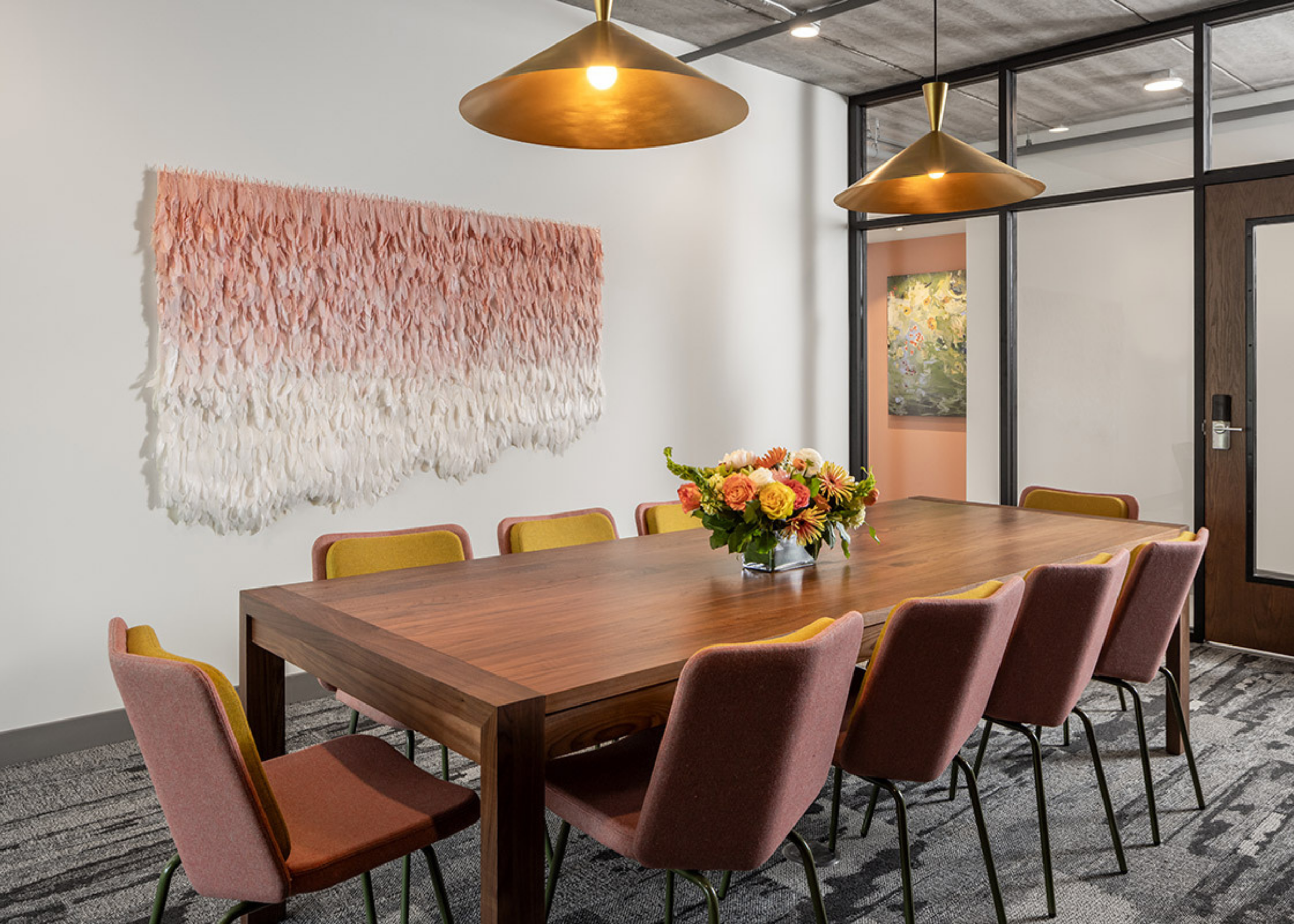
An aesthetically pleasing conference room themed with warm pinks, oranges and yellows.
What Looks Good vs. What Works
Here's a persistent misconception in office design: that style and function are in tension. Companies choose between a space that looks impressive and one that actually supports how people work, as if those two things require different decisions. They don't, but getting them to work together requires a skilled hand.
Research from the American Society of Interior Designers found that workplace design positively influences health, wellness, employee satisfaction, and work performance simultaneously. These improvements aren't happening in sterile, purely utilitarian environments. They're happening in spaces where someone has made considered aesthetic and functional choices together.
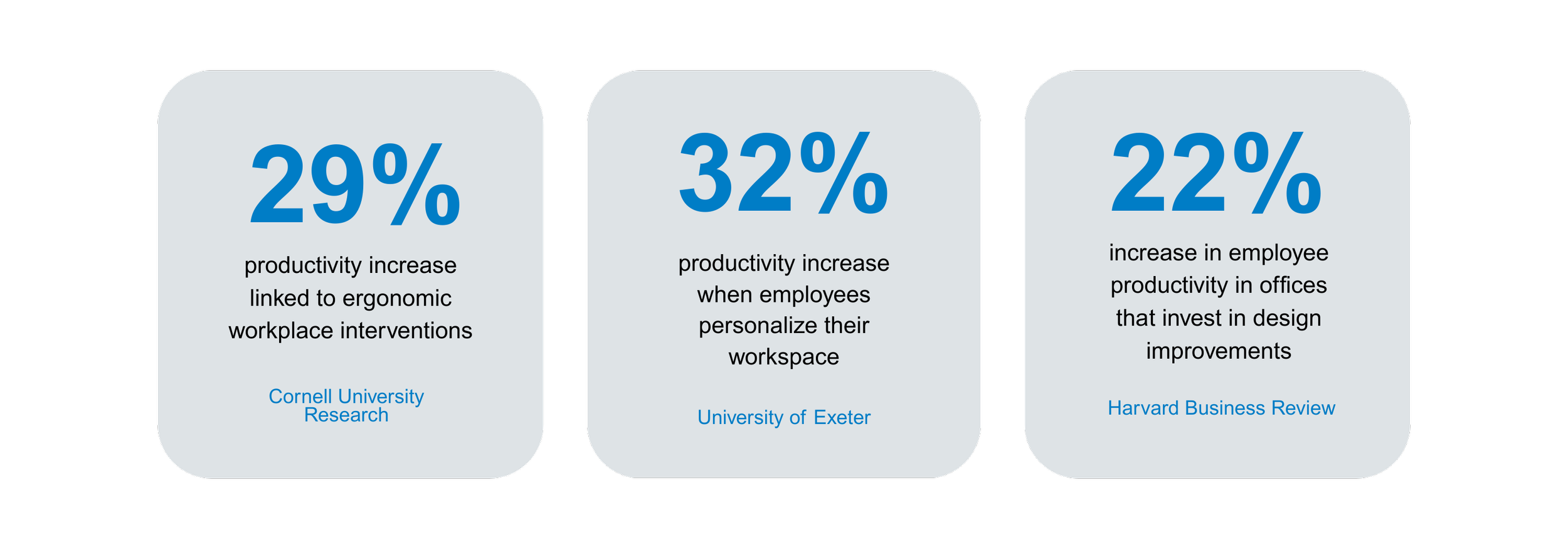
Color psychology, lighting, acoustic design, spatial arrangement — these aren't decorative decisions. They are functional ones. Research consistently shows that blue and green tones reduce eye strain and support concentration, while warm natural light boosts energy and mood. According to Cornell University research highlighted by OP Group, access to natural light in the office significantly improves health and wellness, with employees reporting up to a 29% increase in productivity.
That's exactly why hiring a skilled interior designer matters. A great designer doesn't make you choose between a space that looks like your brand and one that helps your team do their best work. They understand your aesthetic vision and your practical needs, and they make both work together. The aesthetic choices become functional ones: the color that makes the brand pop is also the one that helps people stay alert; the furniture that photographs well also supports good posture and longer focus sessions.
Start with what your team needs, then design around it. Function first, style as the execution. In the hands of a designer who understands both, they'll work together beautifully.
Ready to Design a Space Your Team Will Love?
If you're designing a new space, we're here to throw our hat in the ring. This is just a quick preview of the extent of our expertise that we can offer. Reach out to us now for a free initial space consult for your new office, and we'll cover everything you need to know from technology considerations to furniture lead times to meet your deadlines.
Get in touch now!
📞 (248) 307-1850 | ✉️ info@oexusa.com | 🌐 oexusa.com
Article Sources:
Capital One Work Environment Survey — via HR Dive
Density.io Office Workers Survey, 2023
International Interior Design Association (IIDA)
CBRE Research, 2024 — Average Lease Term Analysis
CBRE Occupier Pulse Survey, 2024
Commercial Property Executive, 2026 Office Outlook
JLL, 2026 Office Market Outlook & Supply Forecast
American Society of Interior Designers (ASID)
Cornell University — Ergonomic Workplace Productivity Research
University of Exeter — Workspace Personalization Study
Harvard Business Review — Office Design & Productivity