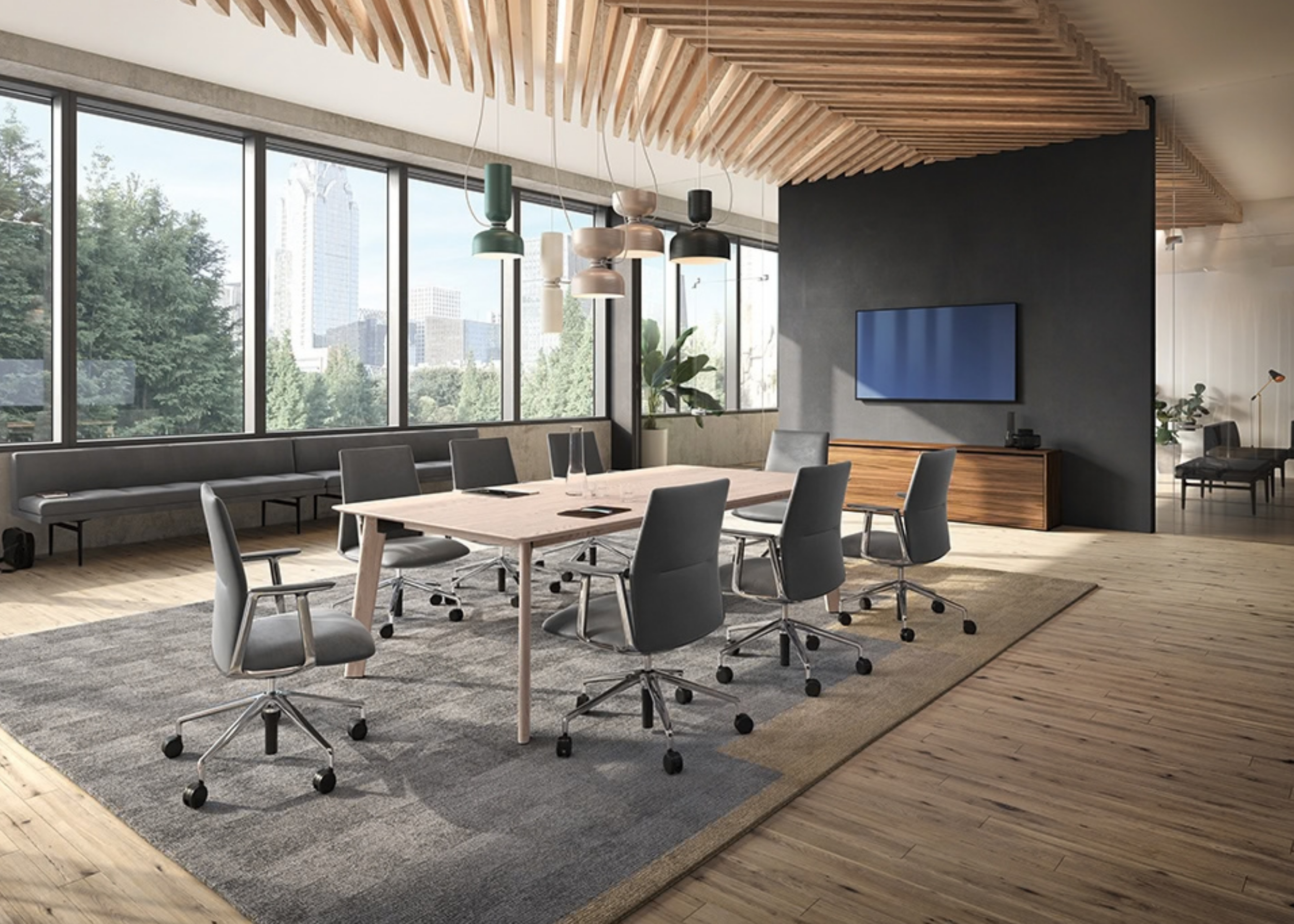
A polished conference space with natural light, chic furniture, and an open layout.
Shorter Meetings Start With Better Spaces
That heavy, suspended feeling when it seems like the room itself won't let you leave? You're not the only one who feels it. On average, half of all meetings start late and drag on, which means your team racks up hours of dead time every month. We're quick to adjust the meeting agenda, the strategy, the number of people in the room, but the real culprit is sneaky — the conference space itself. When your space isn't built for clear communication, you spend extra effort just keeping everyone engaged and coherent. Fix the space, own the meeting, and win the time back. Here's where to start.
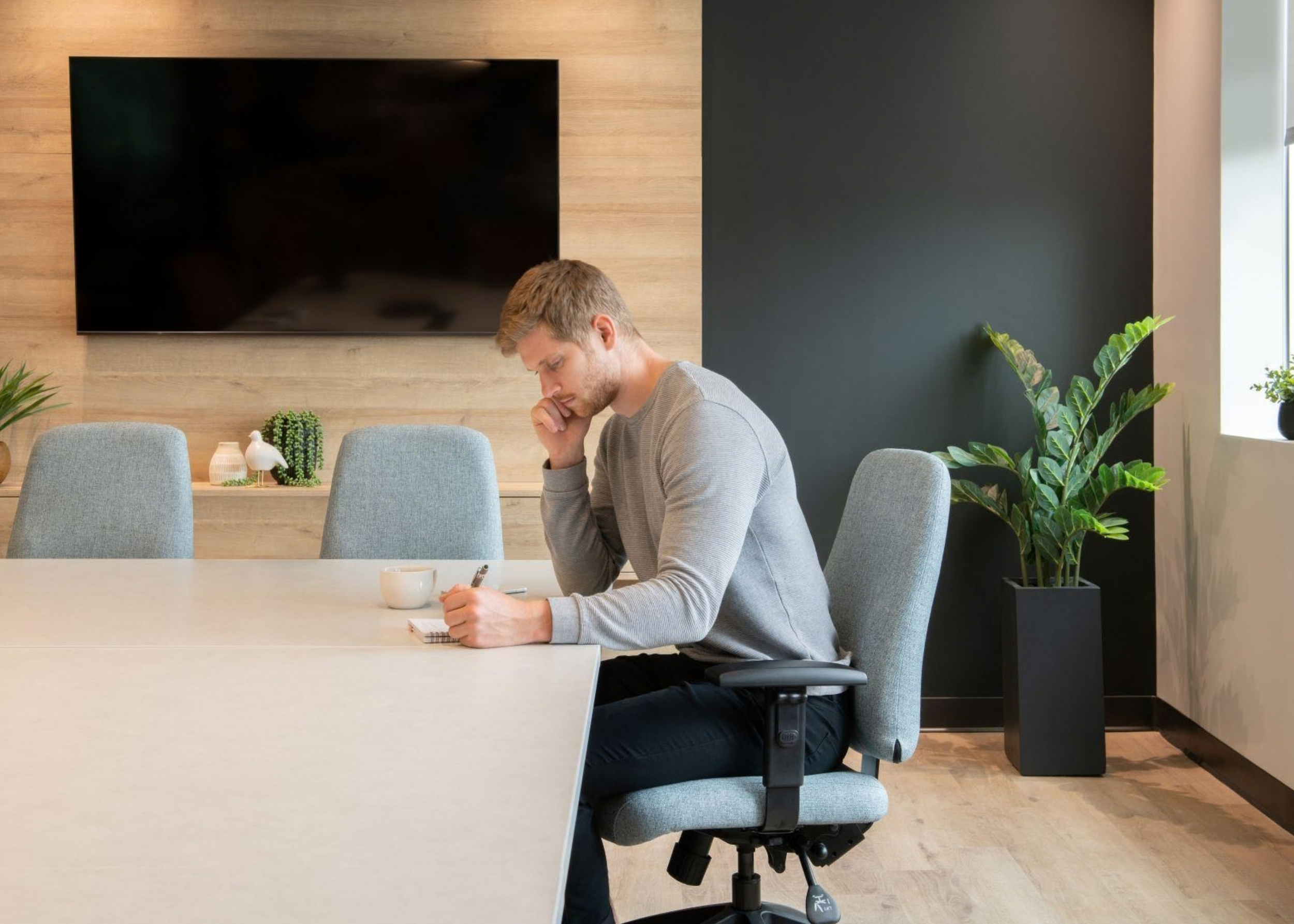
Young professional sits at a conference table in a gray upholstered ergonomic chair, writing in a notepad and awaiting a meeting.
The Comfort Problem
There's a persistent assumption that making a conference space more comfortable means making it more casual. The research says the opposite.
Ergonomic comfort in a meeting environment increases focus. A 2025 analysis of 24 randomized controlled trials, published in PubMed, found that ergonomic workplace interventions reduced the likelihood of work-related lower back pain by nearly half. But the business case doesn't even require a medical study. Anyone who has sat in a bad chair for ninety minutes knows exactly what it does to their attention span.
Discomfort doesn't just make people want to leave. It shortens the meeting in the room while creating follow-ups outside of it — follow-ups that wouldn't have been necessary if the first conversation had been easier to sit through.
The fixes are straightforward. Ergonomic seating with lumbar support and height options accommodates different body types and longer sessions without the physical toll. Height-adjustable tables keep the room functional for both focused strategy and quick stand-up check-ins. Screens mounted at eye level instead of high on the wall prevent the neck strain that quietly accumulates over a long meeting. Layered, indirect lighting that's easy on the eyes without being so soft it encourages people to snooze makes a surprisingly significant difference in how alert and engaged a room feels.
None of this requires a dramatic overhaul. It's small, targeted upgrades to how a room feels that directly correlate with how sharp the people inside it remain.
Our takeaway: When people are physically comfortable, they stay mentally present, meaning they move faster and accomplish more.
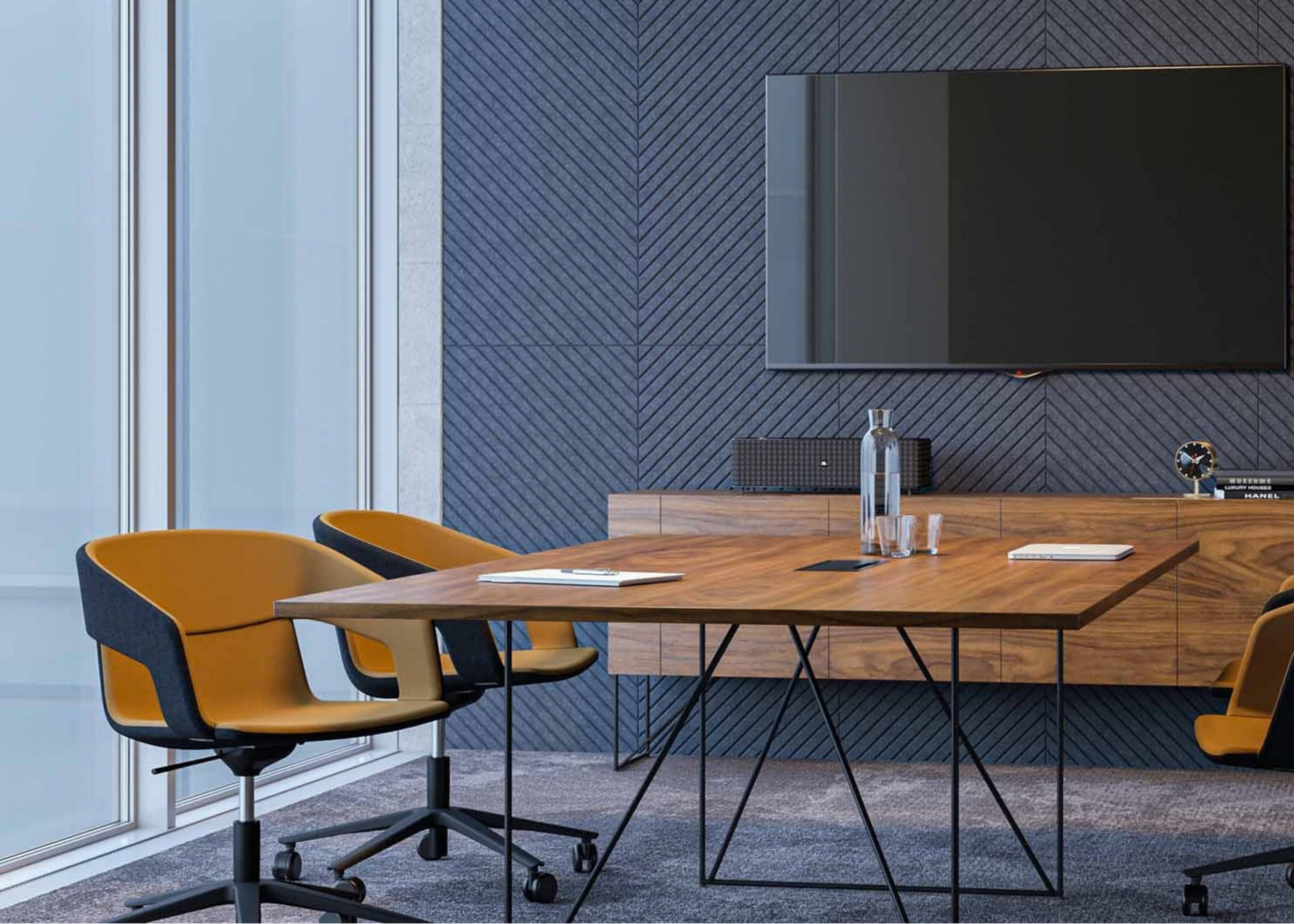
An intimate conference room with orange and gray swivel chairs and a modern wood top table, accented by wall acoustics and technology.
The Layout Issue
There are conference room layouts that can automatically stifle your end goal. Poor sightlines, tables that are too large for the amount of people you're hosting, or visual distractions from outside the room can all contribute.
Designing for connection changes the outcome. At its core, a meeting is about finding common ground — with your team, your clients, your collaborators. The room should support that, not fight it.
The basics matter more than they ever get talked about. Eye contact is easier and psychologically more powerful when the table size actually matches the number of people seated at it. Acoustic control keeps communication clean and prevents the awkward repetition that quietly erodes confidence in a room. Even room size relative to group size has documented effects: correctly scaled spaces encourage equal participation and stronger team dynamics.
According to a Jabra study, 74% of employees say smaller meeting rooms strengthen trust and team dynamics, and 73% say these spaces make collaboration easier. Having the ability to include a permanent meeting space that feels more private is a great asset for companies, but if your space doesn't allow, that's not a huge issue. Flexible furniture solutions, like tables that expand or storage-friendly seating, can fill that need for large or small meetings with an easy swap.
Our takeaway: Keep conference spaces flexible and correctly sized to help teams reach decisions faster.
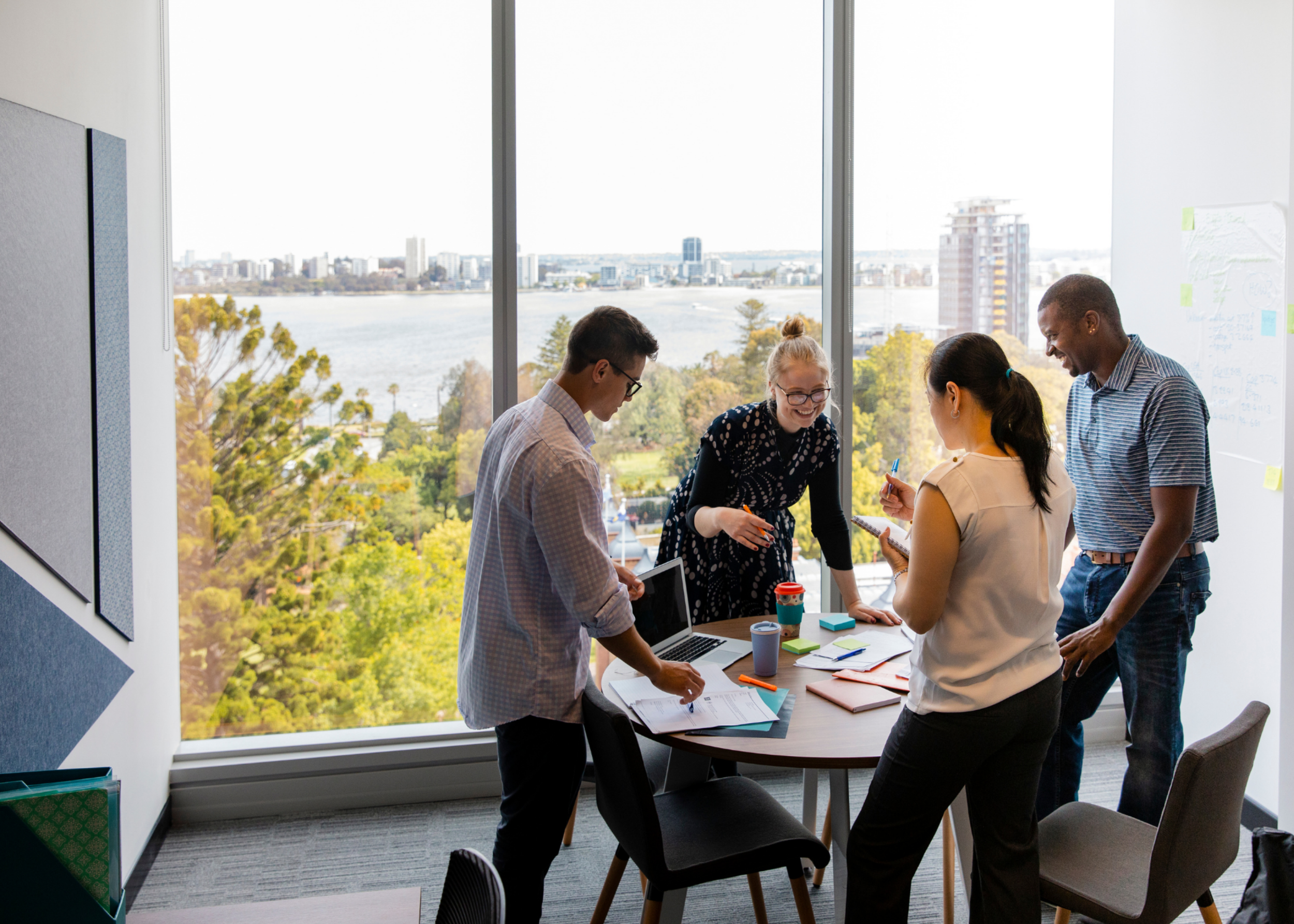
A team of coworkers collaborate around a small round table, with notebooks and sticky notes laid out on top of it, with a whiteboard and city skyline in the background.
Talking to Each Other, Not at Each Other
None of this works in isolation. The right layout gets everyone facing each other and the right comfort keeps them present, but the right technology is what keeps the conversation moving forward, not stalling out.
According to Jabra, 72% of employees say better-equipped meeting rooms would significantly boost their productivity, and 70% feel more confident sharing ideas when technology works seamlessly. That confidence matters. It's the difference between a meeting where ideas surface and one where they quietly stay in someone's head.
When conferencing systems, displays, and collaborative tools integrate without friction, you also eliminate those notorious 5–7 minutes of fumbling at the start — which, across a week's worth of meetings, adds up fast. Employees in well-designed workplaces are also significantly more likely to engage in impromptu collaboration and creative work (Gensler, 2025) — meaning the investment pays dividends beyond the scheduled hour.
The thread running through all three of these elements is the same: when your space is built to support people rather than fight them, meetings stop being something to survive and start being something that actually moves the needle.
Our takeaway: Comfort, layout, and technology aren't three separate problems — they're one. Get all three right, and shorter, sharper meetings follow naturally.
Browse Conference Room Solutions
Well-designed meeting spaces help teams collaborate more effectively, stay focused, and finish meetings faster. Your space should be doing the heavy-lifting, not your team!
Check out our details on conference rooms here 👉 OEX Meeting Spaces
Or get in touch with our workspace consultants or design team directly!
Article Sources:
Santos W, Rojas C, Isidoro R, Lorente A, Dias A, Mariscal G, Benlloch M, Lorente R. Efficacy of Ergonomic Interventions on Work-Related Musculoskeletal Pain: A Systematic Review and Meta-Analysis. J Clin Med. 2025;14(9):3034. doi: 10.3390/jcm14093034. PMID: 40364066.
Jabra. (2025). Small Rooms, Big Ideas. Retrieved from https://www.jabra.com/thought-leadership/small-rooms
Gensler Research Institute. (2025). Global Workplace Survey 2025. gensler.com/gri/global-workplace-survey-2025